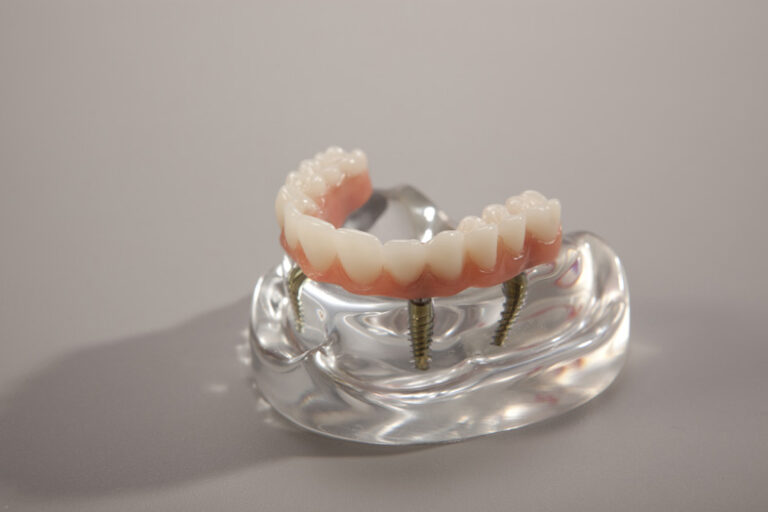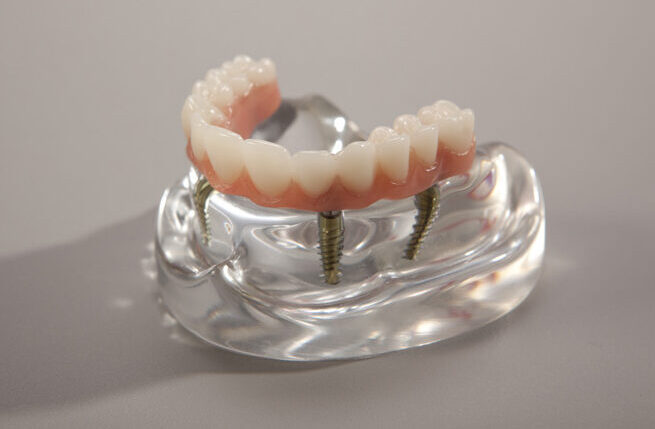
All-on-4 implants are a full-arch tooth replacement solution that uses just four dental implants per jaw to support a complete, permanently fixed set of teeth. Unlike removable dentures, they function like natural teeth for biting, chewing, and speaking. This article explains how they work, who qualifies, what the process involves, and how they compare with other tooth replacement options.
What are All-on-4 dental implants, and how do they work?
All-on-4 implants are a fixed dental prosthesis that replaces an entire arch of teeth using only four strategically placed implants in the jawbone. Two implants are positioned vertically at the front, while the two rear implants are angled up to 45 degrees. This angulation increases contact with available bone, allowing a bridge of 12 to 14 teeth to be securely anchored without requiring bone grafting in most cases.
The angled placement of the posterior implants is what makes this approach genuinely different from placing individual implants or using traditional implant-supported dentures. By tilting the rear implants, we can engage denser, more stable bone that is often present even when overall bone volume has decreased. The result is a fixed arch that stays in place permanently and restores the full function of natural teeth.
Who is a good candidate for All-on-4 dental implants?
Good candidates include adults who have lost most or all of their teeth, have multiple failing or severely decayed teeth, or have worn removable dentures for years and want a permanent alternative. Many patients who were previously told they lacked enough bone for traditional implants are still eligible for All-on-4, thanks to the angled implant technique that works with the bone that remains.
General health, gum condition, and jawbone density are all evaluated during the consultation. Patients with well-managed health conditions are often still strong candidates. A thorough assessment helps determine whether this approach is the right fit for each individual’s situation.
What does the All-on-4 treatment process look like, from consultation to final smile?
The process begins with a detailed consultation that includes 3D imaging to map the jawbone and plan precise implant placement. On the day of surgery, all four implants are placed, and a temporary arch is attached the same day, so patients leave with functional teeth. The entire procedure is completed in a single visit.
A healing period of several months follows, during which the implants fuse with the jawbone. Once that integration is complete, the final permanent prosthesis is fitted. Recovery typically involves some swelling and dietary adjustments in the early weeks, but most patients return to normal routines relatively quickly.
How do All-on-4 implants compare with traditional dentures and other implant options?
Traditional removable dentures can shift, require adhesives, and do not prevent bone loss over time. All-on-4 implants are permanently fixed in place, restore natural biting force, and help preserve the jawbone by keeping the implant roots active. There is no need to remove them for cleaning, since patients brush and floss them just like natural teeth.
Compared with All-on-6 or individual implants, All-on-4 requires fewer implants and often eliminates the need for bone grafting, making it more accessible for patients with reduced bone volume. Individual implants address single missing teeth rather than full arches, so the comparison depends on the extent of tooth loss. For full-arch restoration, All-on-4 offers a strong balance of stability, efficiency, and long-term value, with many patients enjoying their results for 10 or more years with proper care.
If you are considering whether All-on-4 implants might be the right solution for your smile, we would love to help you explore your options. Request an appointment with our team and take the first step toward a confident, fully functional smile.