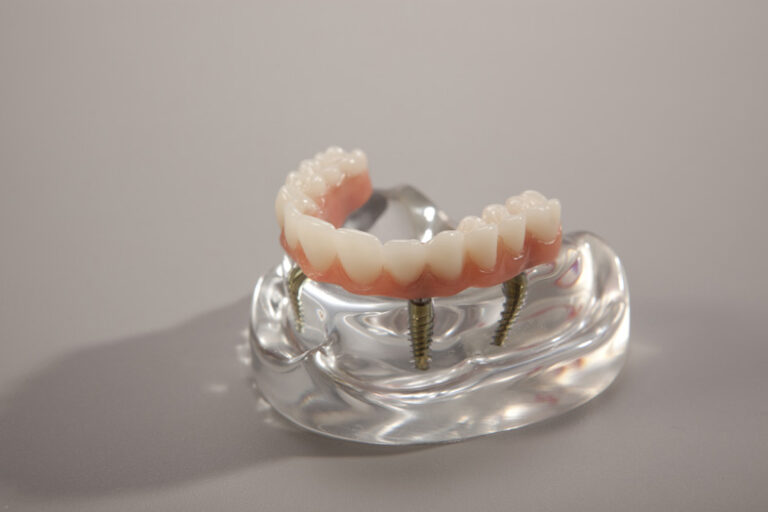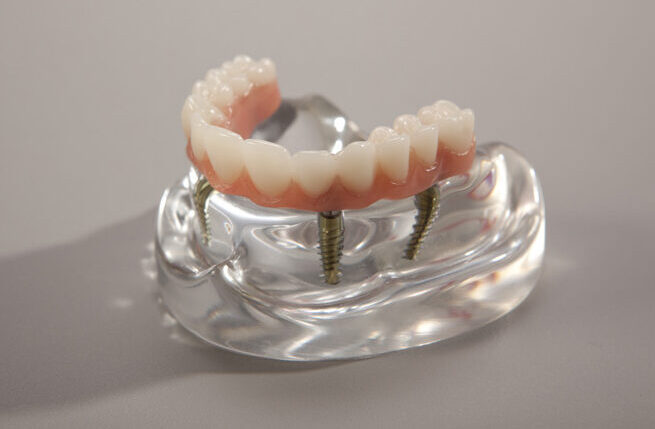
All-on-4 implants and individual implants are both permanent tooth replacement solutions, but they serve very different needs. All-on-4 uses just four implants to support an entire arch of teeth, making it ideal for patients with significant tooth loss. Individual implants replace single missing teeth. Understanding the differences in structure, cost, and candidacy helps you make a confident, informed decision about your smile.
What are All-on-4 implants, and how are they different from individual implants?
All-on-4 implants are a full-arch restoration that anchors a complete set of 12 to 14 replacement teeth onto just four strategically angled implants in the jawbone. Individual implants, by contrast, replace one tooth at a time, each requiring its own implant post, abutment, and crown.
The core structural difference comes down to scope. With All-on-4, the four implants are placed at precise angles to maximize contact with available bone, allowing the entire arch to be supported without needing an implant for every missing tooth. The result is a fixed, non-removable bridge that functions and feels like a natural set of teeth.
Individual implants work best when one or a few teeth are missing and the surrounding teeth and bone are healthy. Each implant stands independently, mimicking a single natural tooth root. All-on-4 is designed for patients who have lost most or all of their teeth in an arch, or those dealing with significant decay or bone loss that makes saving individual teeth impractical.
Which tooth replacement option is right for your situation?
The right choice depends on how many teeth you’ve lost, the condition of your jawbone, and your lifestyle priorities. All-on-4 is typically the better fit for patients with extensive tooth loss, while individual implants suit those replacing isolated missing teeth with otherwise healthy dentition.
Here are the key factors that guide this decision:
- Extent of tooth loss: All-on-4 addresses full-arch loss in a single procedure. Individual implants are placed one at a time for isolated gaps.
- Jawbone density: All-on-4’s angled placement often eliminates the need for bone grafting, even in patients with some bone loss. Individual implants may require grafting if bone volume is insufficient.
- Treatment timeline: All-on-4 can be completed in a single day, giving you a functional smile before you leave the office. Individual implants involve multiple appointments over several months per tooth.
- Maintenance: All-on-4 implants are brushed and flossed just like natural teeth, with no removal required. Individual implants are maintained the same way and integrate naturally into your existing oral care routine.
How do the costs and long-term value of All-on-4 implants compare to individual implants?
All-on-4 implants generally involve a higher upfront investment than a single individual implant, but they replace an entire arch for a fraction of what multiple individual implants would cost. For patients needing full-arch restoration, All-on-4 is almost always the more cost-effective path.
| Factor | All-on-4 Implants | Individual Implants |
|---|---|---|
| Implants required | 4 per arch | 1 per missing tooth |
| Bone grafting | Rarely needed | Sometimes required |
| Upfront cost | Higher per arch, lower per tooth replaced | Lower per implant, higher if replacing many teeth |
| Long-term durability | 10+ years with proper care | Decades with good oral hygiene |
Avoiding bone grafting with All-on-4 also reduces both cost and recovery time for many patients. Both options offer strong long-term value compared to traditional dentures, which require periodic replacement and adjustments.
What can you expect from the All-on-4 and individual implant processes at a dental practice?
Both treatments begin with a thorough consultation and imaging to assess your bone structure, oral health, and goals. From there, the paths differ meaningfully in terms of time and number of visits required.
All-on-4 process:
- Comprehensive evaluation and 3D imaging to plan implant placement
- Any necessary extractions performed at the same appointment
- Four implants placed in the jawbone at calculated angles
- A temporary but fully functional arch attached the same day
- Final permanent restoration fitted after the implants integrate with the bone
Individual implant process:
- Consultation and imaging to confirm bone health and spacing
- Bone grafting if needed, followed by a healing period
- Implant post placed and allowed to fuse with the jawbone over several months
- Abutment attached once integration is confirmed
- Custom crown placed to complete the restoration
If you’re weighing your options and want a clear picture of which path fits your situation, we’d love to help. Request an appointment with our team at Ocean Dental & Aesthetics, and we’ll walk you through everything—from your first scan to your final smile.