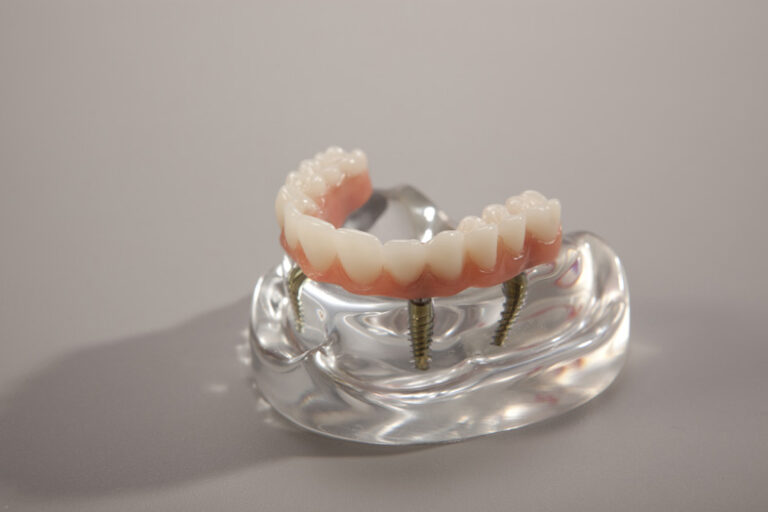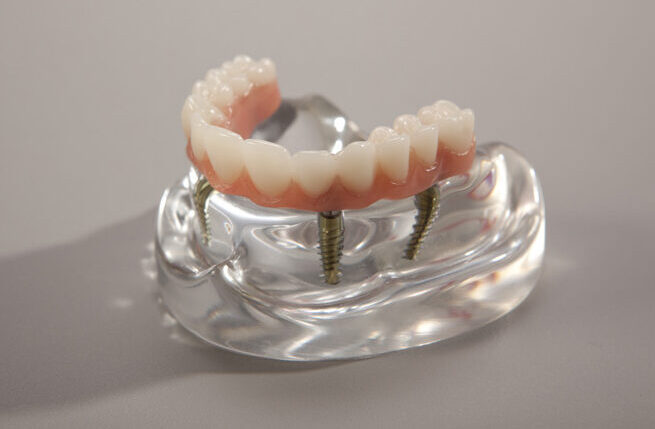
All-on-4 implants can replace both upper and lower teeth. Each jaw requires just four strategically placed implants to support a full arch of 12 to 14 prosthetic teeth. Whether you need one arch restored or both, this approach offers a fixed, permanent solution that functions like natural teeth. Below, we cover how it works, who qualifies, and what recovery looks like.
What are All-on-4 dental implants and how do they work?
All-on-4 implants are a full-arch tooth replacement system that uses four dental implants per jaw to anchor a complete set of fixed prosthetic teeth. Two implants are placed vertically at the front of the jaw, and two are angled toward the back. That angled placement is what makes this approach different—it engages more of the available jawbone, reducing the need for bone grafting in many cases.
The result is a bridge of 12 to 14 teeth that stays permanently in place. Unlike removable dentures, you brush and floss these teeth just as you would natural ones. There is no adhesive, no removal at night, and no slipping. The procedure is completed in a single day, so patients leave with a fully functional smile on the same day treatment begins.
Can All-on-4 implants be placed on both the upper and lower jaw at the same time?
Yes, All-on-4 implants can be placed on both the upper and lower jaw during the same appointment. This is sometimes called a “full-mouth” or “dual-arch” restoration, and it is a common choice for patients who have experienced significant tooth loss across both arches.
Whether both jaws are treated at once or in separate stages depends on your overall health, healing capacity, and personal preference. Treating both arches simultaneously reduces the total number of appointments and recovery periods. Your dental provider will evaluate your bone structure, health history, and goals to recommend the approach that makes the most sense for you. Either way, you leave with temporary prosthetics in place while your implants integrate with the bone over the following months.
Who is a good candidate for All-on-4 full-arch implants?
Most adults who have lost most or all of their teeth in one or both arches are potential candidates for All-on-4 implants. A thorough evaluation will confirm whether this treatment is the right fit. Key factors that support candidacy include:
- Significant tooth loss due to decay, gum disease, or injury affecting a full arch
- Adequate jawbone density to support implant placement, though the angled design often allows patients with some bone loss to qualify without grafting
- Good general health, with any chronic conditions such as diabetes well managed
- Non-smoker status or willingness to quit, since smoking can affect implant healing
- Commitment to oral hygiene and regular follow-up care after placement
One of the most encouraging aspects of this treatment is that patients who were previously told they lacked sufficient bone for traditional implants often qualify for All-on-4, thanks to the strategic angling of the rear implants.
What is the recovery and long-term care like after All-on-4 treatment?
Recovery after All-on-4 placement is gradual, with most patients managing mild discomfort in the first one to two weeks. Soft foods are recommended during the initial healing phase, and your provider will give you clear guidance on what to eat and avoid. Temporary prosthetics are worn while the implants bond with the jawbone, a process that typically takes several months.
Once healing is complete, the temporary teeth are replaced with your permanent prosthetic. At that point, long-term care is straightforward. Brushing twice daily, flossing around the implants, and attending regular dental check-ups are the main habits that keep everything in good shape. Many patients enjoy their All-on-4 implants for ten years or more with consistent care.
If you are ready to explore whether All-on-4 implants are right for you, we would love to help. Request an appointment with our team and take the first step toward a complete, confident smile.