
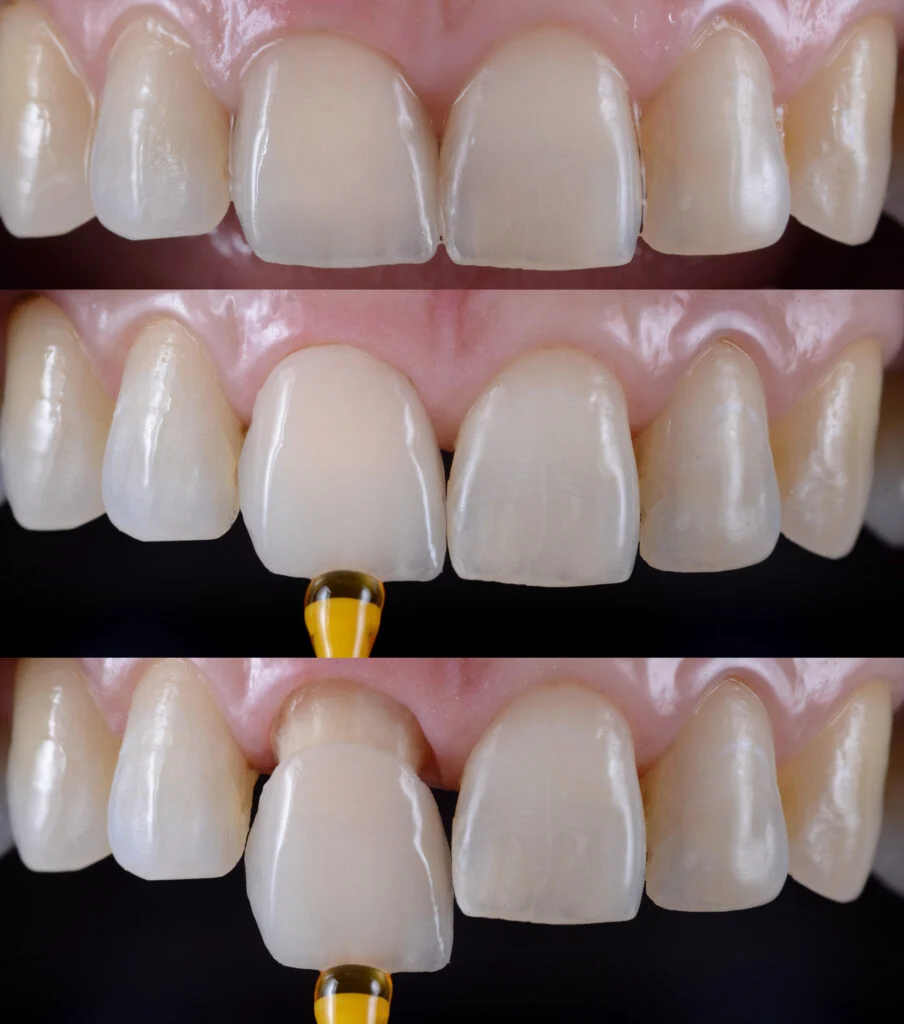
Getting a dental crown is not painful during the procedure thanks to local anaesthesia that completely numbs the treatment area. Most patients feel only mild pressure and vibration whilst the tooth is being prepared. After the numbing wears off, some temporary sensitivity is normal but typically mild and manageable with over-the-counter pain relief if needed.
What does getting a dental crown actually feel like?
The crown placement procedure itself feels comfortable because local anaesthesia eliminates pain throughout the treatment. You’ll experience a slight pinch when the numbing injection is administered, followed by a tingling sensation as the area becomes numb. Once fully anaesthetised, you won’t feel any pain during tooth preparation, only gentle pressure and the sound of dental instruments.
During the procedure, you might notice vibrations from the dental handpiece as your tooth is shaped to accommodate the crown. This sensation is similar to what you’d feel during a routine filling, but without discomfort. Many patients describe feeling pressure when impressions are taken or when the temporary crown is fitted, but these sensations aren’t painful.
Modern pain management techniques ensure your comfort throughout the getting a crown procedure. We carefully monitor your comfort level and can provide additional numbing if you feel any sensitivity. The entire process typically takes one to two hours, during which you’ll remain comfortable and relaxed. If you experience dental anxiety, we can discuss personalised comfort options during your consultation to ensure a stress-free experience.
How long does discomfort last after getting a crown?
Dental crown recovery typically involves mild sensitivity that resolves within a few days to two weeks. In the first 24 to 48 hours after crown placement, you may notice tenderness around the gum line and temporary sensitivity to hot or cold temperatures. This is a normal response as your tooth adjusts to its new restoration.
During the first week, any crown placement discomfort should steadily decrease. You might experience slight sensitivity when biting down, particularly if your bite needs minor adjustment. This sensation occurs because the crowned tooth is adapting to pressure distribution changes. Most patients find that any initial tenderness resolves completely within seven to ten days.
Temporary sensitivity to temperature happens because the tooth structure has been modified to accommodate the crown. The nerve inside may be slightly irritated but typically calms down as healing progresses. If you notice prolonged sensitivity lasting beyond two weeks, or if discomfort increases rather than improves, contact our practice. These symptoms could indicate that your bite needs adjustment or that the crown requires refinement. To learn more about crowns & bridges , we’re happy to discuss your specific situation during an appointment.
What can you do to minimise pain during crown placement?
Effective crown pain management begins with open communication about your concerns before the procedure. Let your dental team know about any previous discomfort experiences, anxiety levels, or specific sensitivities. This allows us to tailor our approach, ensuring you receive adequate anaesthesia and feel comfortable throughout the treatment.
Several comfort options can make your painless crown procedure even more relaxing. We offer various sedation levels for patients who experience dental anxiety, from mild relaxation options to deeper sedation for particularly nervous individuals. Modern dental technology also reduces procedure time, meaning less time in the chair and faster completion of your treatment.
Before your appointment, get adequate rest and eat a light meal, as this helps your body respond better to anaesthesia. During the procedure, practise slow, deep breathing to maintain relaxation. Signal your dentist immediately if you feel any discomfort, as additional numbing can be provided at any time. Choosing an experienced dentist makes a significant difference in minimising dental crown pain, as refined techniques and gentle handling reduce tissue trauma and post-procedure sensitivity. Schedule an appointment with us to discuss your individual comfort needs and explore anxiety management options that will make your crown placement as comfortable as possible.
Why do some people experience pain with crowns whilst others don’t?
Individual pain experiences with dental crowns vary significantly based on several factors. The condition of your tooth before crown placement plays a major role in determining discomfort levels. Teeth requiring crowns due to extensive decay or cracks may have more nerve sensitivity than teeth crowned for cosmetic reasons or minor damage.
Whether you’ve had root canal treatment affects your crown experience considerably. Teeth that have undergone root canals have no nerve tissue remaining, so they typically cause no post-crown sensitivity. Conversely, vital teeth with healthy nerves may experience temporary sensitivity as they adjust to the crown, though this is usually mild and short-lived.
Personal pain sensitivity levels differ from person to person, influencing how you perceive sensations during dental crown recovery. Some individuals naturally have lower pain thresholds or heightened nerve sensitivity, whilst others tolerate dental procedures with minimal discomfort. Your overall oral health, gum condition, and even stress levels can affect how your body responds to crown placement.
Proper crown fit is essential for long-term comfort. A well-fitted crown that’s correctly shaped and adjusted to your bite should feel natural within days. Issues causing ongoing pain often relate to bite misalignment, where the crown sits slightly too high, creating pressure when you chew. This is easily corrected with a simple adjustment appointment. Personalised treatment planning addresses your individual circumstances, ensuring your crown is designed and placed with your specific tooth condition and sensitivity levels in mind.

