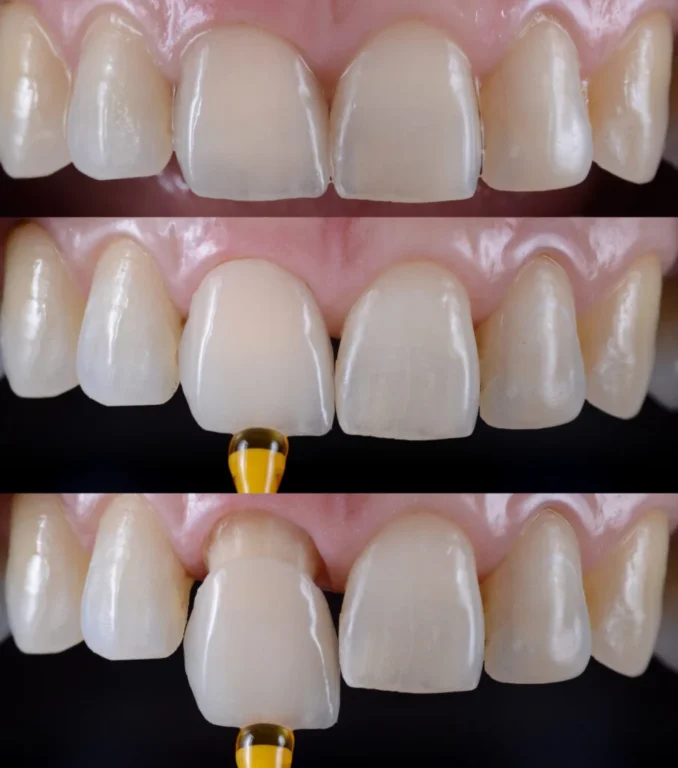
If you’re wondering whether your professional teeth whitening treatment will brighten your crowns or veneers along with your natural teeth, the answer is no. Whitening treatments only work on natural tooth enamel and cannot change the color of dental restorations like crowns, veneers, bridges, or fillings. These materials are designed to be stain-resistant, but that same quality prevents them from responding to bleaching agents. Understanding this limitation helps you plan your dental treatments strategically and avoid potential color mismatches in your smile.
Does teeth whitening work on crowns and veneers?
Teeth whitening treatments do not change the color of crowns, veneers, or other dental restorations. These materials, including porcelain, ceramic, and composite resin, are non-porous and don’t respond to bleaching agents like natural tooth enamel does. While whitening products can effectively lighten natural teeth by several shades, your existing dental work will remain exactly the same color it was when originally placed.
This fundamental difference matters because many people assume their entire smile will brighten uniformly during professional teeth whitening treatments. If you have visible restorations on your front teeth, whitening your natural teeth can create a noticeable shade difference that makes your dental work stand out. The good news is that whitening treatments won’t damage your crowns or veneers in any way, they simply won’t affect their appearance.
Why don’t crowns and veneers respond to whitening treatments?
The reason crowns and veneers don’t whiten comes down to material science. Natural tooth enamel is porous at a microscopic level, which allows stains to penetrate the surface over time. This same porosity allows whitening agents (typically hydrogen peroxide or carbamide peroxide) to enter the enamel and break down stain molecules, effectively lightening the tooth’s color.
Dental restorations are manufactured from materials like porcelain, ceramic, or composite resin that are specifically engineered to be non-porous and stain-resistant. This design helps them maintain their appearance longer and resist discoloration from coffee, wine, and other staining substances. However, this non-porous structure also means bleaching agents cannot penetrate the material to alter its color. The shade selected when your crown or veneer was created is permanent for that restoration.
Think of it like trying to bleach a ceramic plate versus a cotton shirt. The fabric’s fibers absorb the bleach and change color, while the ceramic’s solid, non-porous surface remains unchanged no matter how long you expose it to bleaching agents.
What happens if you whiten your teeth with existing crowns or veneers?
When you whiten natural teeth that surround existing crowns or veneers, you’ll create a shade mismatch between your dental work and your natural teeth. Your natural teeth will become lighter, while your restorations stay their original color. This difference becomes especially noticeable if your crowns or veneers are on front teeth or in other visible areas when you smile or speak.
The good news is that whitening treatments won’t harm your dental restorations. The bleaching agents are safe for porcelain, ceramic, and composite materials. You don’t need to worry about damaging your crowns or veneers during whitening, but you should expect them to look darker or more yellow compared to your newly whitened natural teeth.
If you have a single crown on a front tooth, for example, whitening could make that restoration stand out significantly. If your veneers cover multiple front teeth, they might create a visible contrast with your whitened natural teeth on either side. The extent of the mismatch depends on how many shades lighter your natural teeth become and where your restorations are located in your smile.
Should you whiten before or after getting crowns and veneers?
The ideal approach is to whiten your natural teeth before getting crowns or veneers. This allows your dentist to match your new restorations to your whitened tooth color, ensuring a uniform appearance across your entire smile. The typical workflow involves whitening your natural teeth, waiting about two weeks for the shade to stabilize, and then creating your crowns or veneers to match that brighter color.
Whitening after getting restorations creates complications. If you’re unhappy with the color mismatch, your only option is to replace the restorations entirely, which means additional expense and dental appointments. A crown or veneer that looked perfect when placed can suddenly appear discolored once surrounding teeth are whitened, even though the restoration itself hasn’t changed.
If you’re planning both teeth whitening and restorative work, discuss the sequencing with your dentist during the planning phase. This strategic timing saves you from needing costly replacements later and ensures your investment in both treatments delivers the cohesive, bright smile you’re hoping to achieve.
What are your options if your crowns or veneers no longer match your teeth?
If you already have a shade mismatch between whitened natural teeth and existing restorations, you have several options to consider. The most comprehensive solution is replacing your crowns or veneers with new ones that match your current tooth color. While this involves additional cost (typically several hundred to over a thousand dollars per restoration), it’s the only way to achieve perfect color harmony across your smile.
Another approach is professional cleaning and polishing of your existing restorations. While this won’t change their inherent color, it can remove surface stains that may have accumulated over time, potentially improving their appearance. This option works best if your restorations have only minor discoloration and the mismatch isn’t too dramatic.
Alternatively, you might consider adjusting your natural tooth color to better match your existing restorations instead of replacing them. This could mean discontinuing whitening treatments and allowing your natural teeth to gradually return to a shade closer to your dental work. For some patients, this is the most cost-effective solution, particularly if the restorations are relatively new and were expensive to place.
We can evaluate your specific situation and help you understand which option makes the most sense based on the number of restorations you have, their location, your budget, and your aesthetic goals. Schedule a consultation to discuss your smile and explore the best path forward for achieving the appearance you want.
Get expert guidance for your smile transformation
Whether you’re considering teeth whitening, planning new dental restorations, or dealing with a color mismatch between your natural teeth and existing crowns or veneers, professional guidance makes all the difference. Our team can assess your unique situation, explain your options clearly, and create a treatment plan that delivers the beautiful, uniform smile you deserve. Don’t let uncertainty about how whitening affects dental work hold you back from achieving your ideal smile. Request an appointment with us today to discuss your cosmetic dentistry goals and discover the best approach for your individual needs.